City Halls Under Pressure - The 3 Tensions Small Municipalities Must Resolve
Across Canada, municipalities under 100,000 residents are confronting the same structural tension.
City halls built 50 years ago were designed for a different era.
Different staffing levels.
Different public expectations.
Different technology.
Different climate risks.
The question is not simply renovation versus rebuild.
It is how to resolve three core civic tensions.
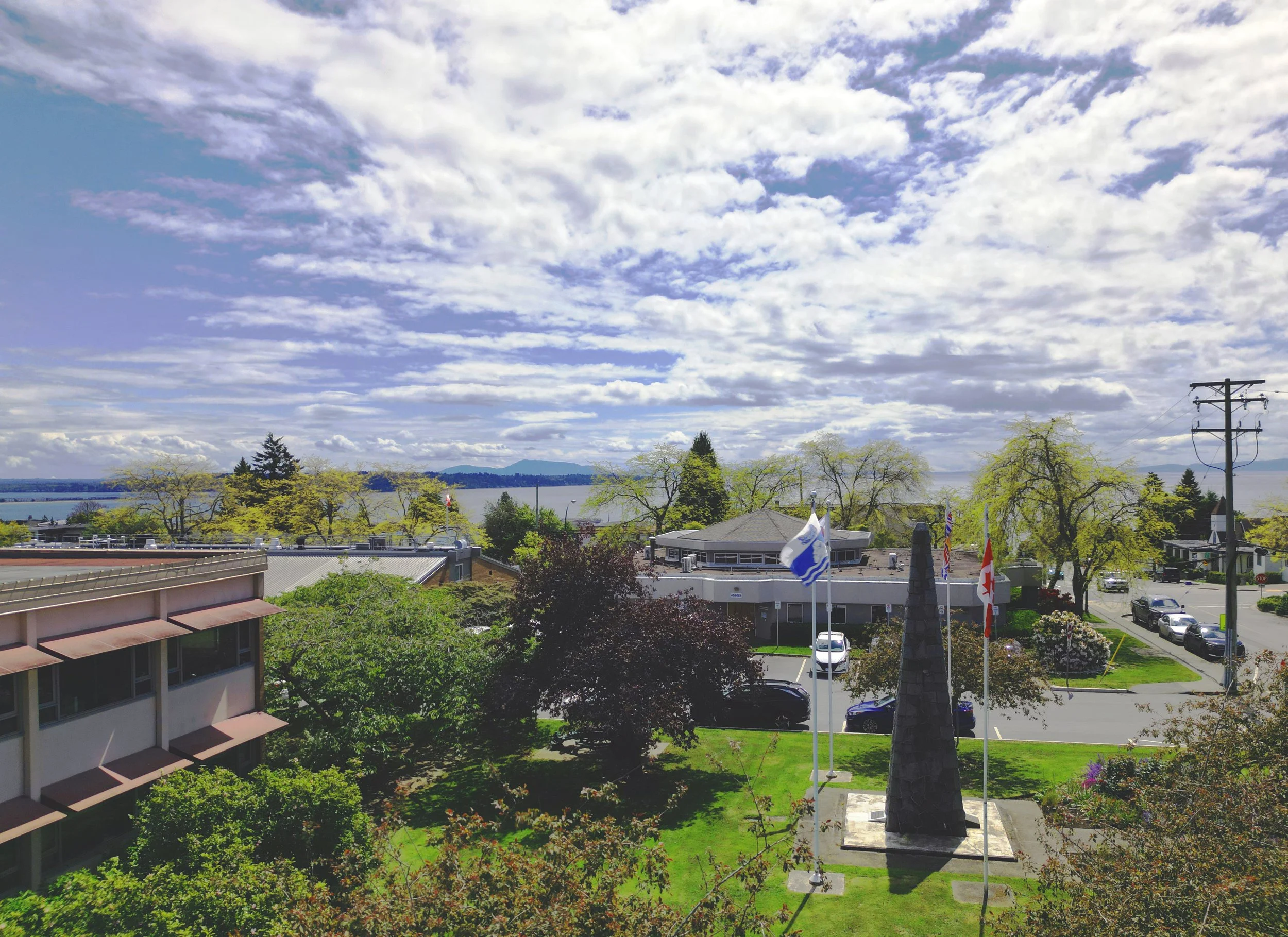
Photo: UPL1FT Consulting Inc.
1. Heritage vs. Performance
Preserve identity or deliver resilience?
Many municipalities attempt incremental renovation.
But seismic, accessibility, energy performance, and service integration requirements often expose structural limits.
The most successful projects begin by separating nostalgia from performance.
2. Ambition vs. Fiscal Capacity
Build iconic or build responsible?
Precedents show dramatic cost variation depending on program ambition and building standards.
The difference between a modest civic hub and a post-disaster campus can double capital cost.
Civic leadership must define the capital “sweet spot” before design accelerates.
3. Autonomy vs. Integration
Separate departments or integrated hub?
Modern service delivery increasingly favors co-location.
Libraries, recreation, wellness, municipal services, and community organizations functioning under one roof reduce duplication and increase public access.
The physical form of civic infrastructure now shapes operational efficiency.
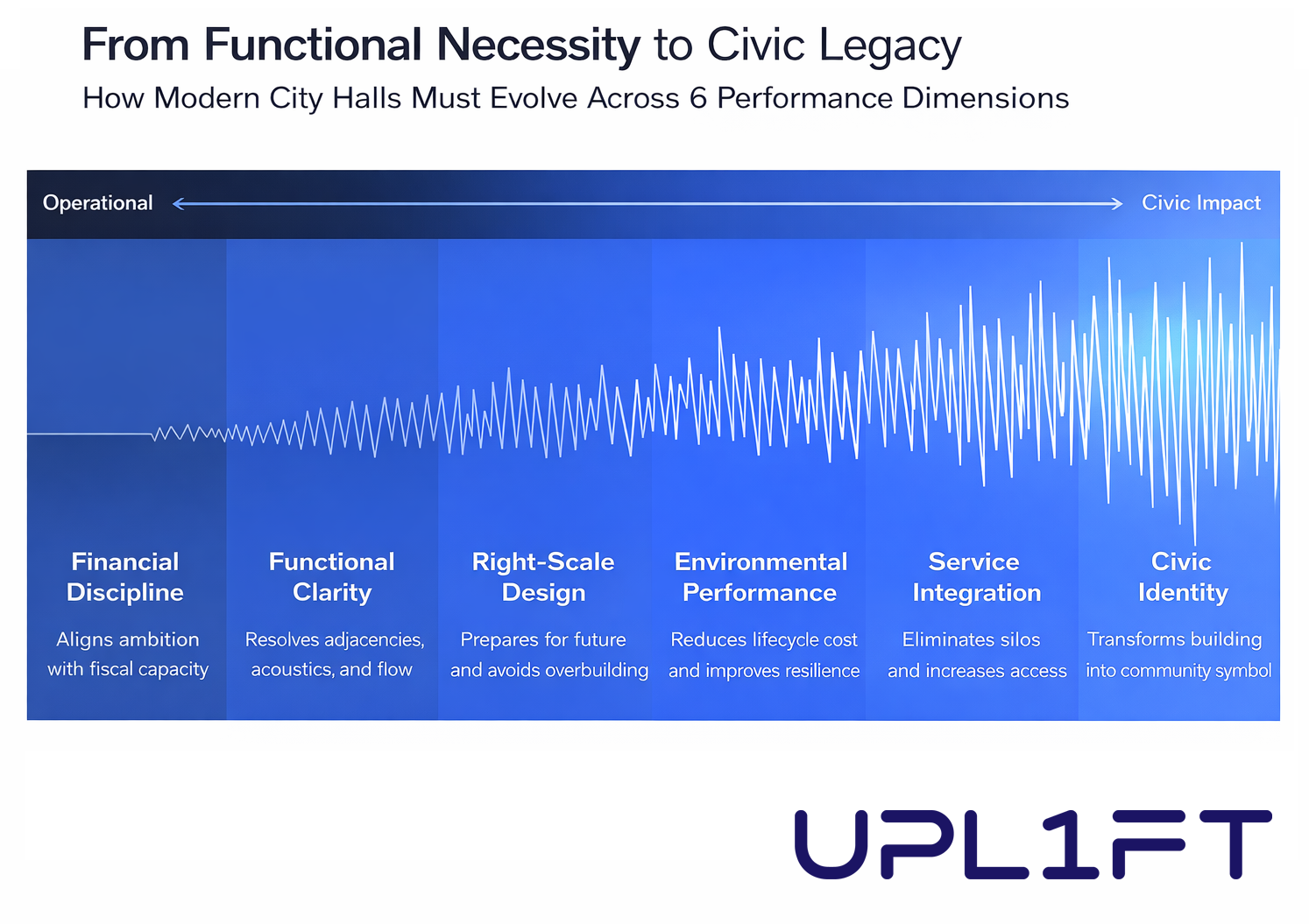
Visual progression graphic showing how financial realism, acoustic zoning, and right-sizing evolve into multi-use synergy and civic identity within the HUBWRX evaluation framework (UPL1FT).
What We Have Learned
From studying civic hubs across Canada:
Co-location improves service convenience and staff collaboration.
Sustainability standards are rising rapidly.
Adaptive reuse can reduce cost but limits flexibility.
Governance clarity determines long-term success more than architecture.
Contextual fit matters more than architectural scale.
The most successful municipalities did not chase prestige.
They pursued alignment.
The Strategic Questions Municipal Leaders Must Resolve
What scale of facility matches our growth trajectory?
What performance standard aligns with our fiscal capacity?
What spatial configuration fits our land constraints?
What governance structure protects long-term value?
These are not architectural questions.
They are capital planning decisions.
How UPL1FT Supports Municipal Leaders
We help municipalities:
Benchmark capital realism
Evaluate renovation vs. replacement
Define integration strategy
Align sustainability ambition with funding opportunity
Structure governance before procurement
Protect long-term operating stability
Not with generic templates.
With contextual intelligence.